Cast and Crew Reflect on Waikīkī Hula Show about Hawaiʻi's LGBTQ History
by Catherine Cruz for Hawaiʻi Public Radio - December 31, 2025:
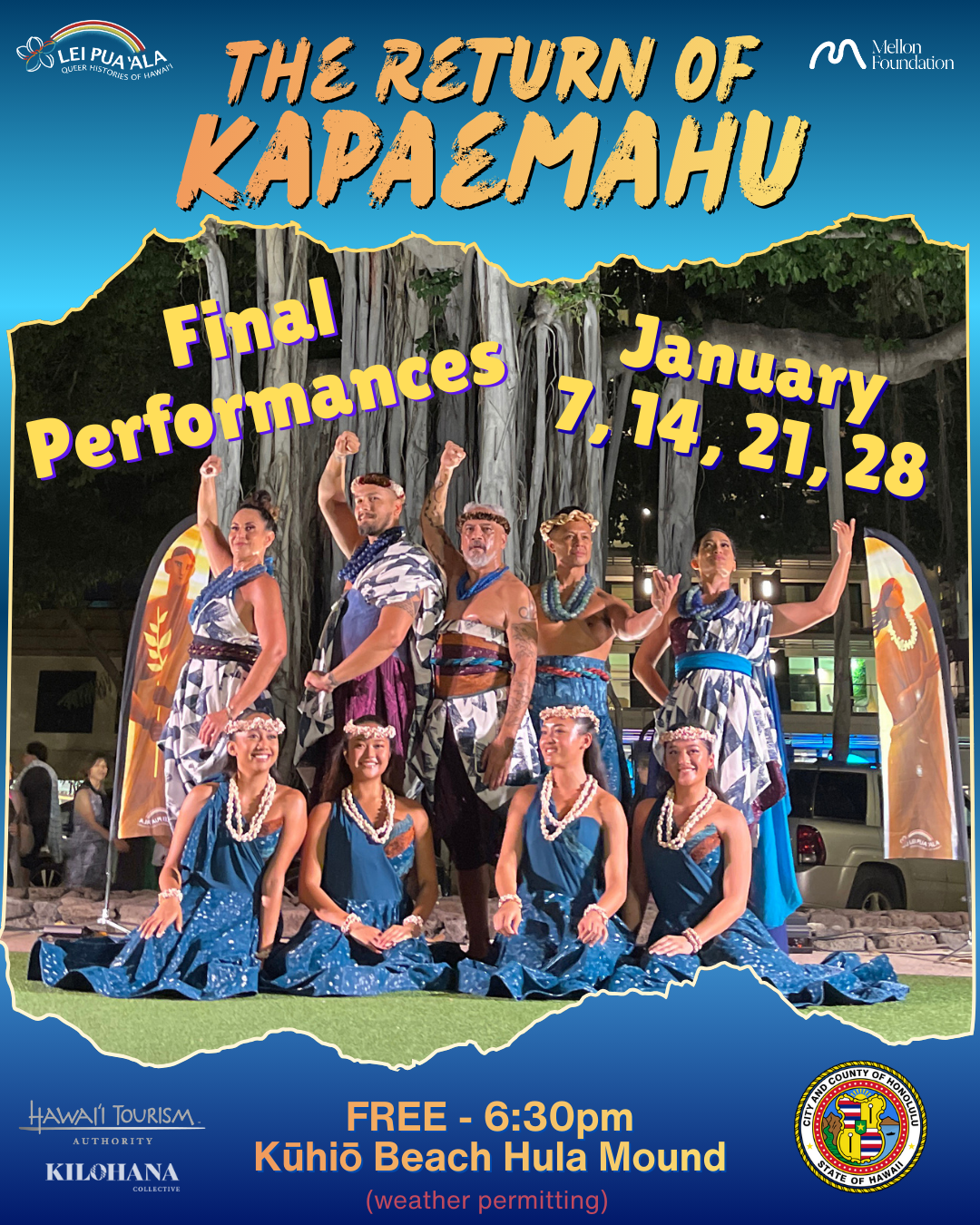
With the end of 2025, you may have been wondering if New Year's Eve would be the last performance of "The Return of Kapaemahu" hula show.
The story of the stones there in Waikīkī was mounted by Kumu Hula Patrick Makuakāne and producers Joe Wilson and Dean Hamer.
The producing duo spent $200,000 of a grant from the Mellon Foundation as part of their ongoing queer histories project in Hawaiʻi.
The Hawaiʻi Tourism Authority also provided $50,000, and it's unclear if this will be the end of its run or just the end of the first season.
The Conversation caught up with some of the performers on Christmas Eve. It was supposed to be dark for the holiday, but the dancers decided to mount a show for visiting families.
HPR heard from a number of the performers, but let's start with sound and light engineer Peter Sturges, who shared what made this production so special.
“I've been doing hula shows here on the mound for close to three years, but this show is so special because the quality of the cast and the production is so high,” Sturges said.
Mark Mauikānehoalani Lovell is a teacher at Waikīkī Elementary and a cast member who believes providing a sense of place is important.
“As a teacher, it's important for me to find examples, not just of authentic culture, which I teach, but also of instances within the culture that still bear relevance to current events, to national politics, to things that my students may see,” Lovell said.
He added that there has been a challenge for the Native Hawaiian community to find moments that resonate with others who do not come from the same culture, though Makuakāne’s approach has created an impact with people.
“He has that gift. There's not a lot of people who can do that,” Lovell said.
“We can translate our stories into books. We have amazing storytellers. We have incredible theatrical productions. This is one of those few events that actually coordinates all three into a package that cultural people, non-cultural people, Indigenous people, non-Indigenous people, Hawaiʻi people, non-Hawaiʻi people can find common ground on. The fact that it centers the story of the māhū so unapologetically makes it all the more relevant and all the more important.”